
Key Takeaways
- Photograph the damage before any vehicle is moved or repaired. Once a vehicle enters a body shop, the scene evidence is gone.
- A physical damage claim covers the truck, trailer, or other covered equipment — not cargo or third-party vehicles. Know which claim type applies before submitting documentation.
- Keep all repair estimates, supplements, tow receipts, and storage invoices. These costs may be covered under a commercial physical damage policy depending on coverage terms and deductible — confirm with your adjuster or broker which apply.
Related documentation steps
Claim evidence is easier to review when the photos, driver report, footage status, and supporting documents point back to one incident record.
documents needed after a truck accident · physical damage documentation · driver incident report checklist · responding to a demand letter
Documenting the damage at the scene
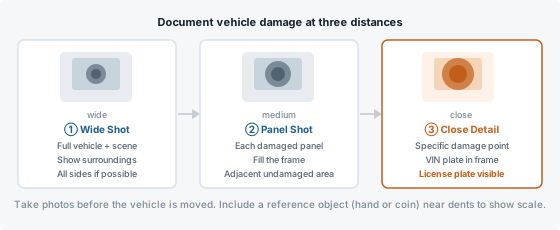
Take photographs from multiple distances — wide angle to show vehicle position and road context, medium shots to show damage panels and contact points, and close shots for specific damage, part numbers if visible, and any pre-existing damage that should be distinguished from incident damage.
Note the vehicle's position, any deployed safety devices, fluid leaks, and whether the truck is drivable. If the truck must be towed, photograph it before it is loaded onto the tow truck. The tow process can change how damage appears and what is visible.
| Photo phase | When | What to capture |
|---|---|---|
| Wide shots | Before any vehicle moves | Both vehicles in position, road surface, full scene context, warning devices |
| Panel shots | Before any vehicle moves | Each damaged panel, approach angle showing contact zone, extent of deformation |
| Close-up detail | Before any vehicle moves | Specific damage points, VIN plate, license plate visible in frame |
| Pre-tow shots | Before tow rigging is attached | All sides of the truck, damage visible from each angle |
| Tow yard shots | On arrival at yard | Any handling damage distinct from incident damage, overall condition |
| Teardown shots | At shop, after panel removal | Hidden structural or component damage not visible at the scene |
Each phase captures evidence the others can't. A photo taken at teardown cannot substitute for one that should have been taken at the scene.
At the repair shop
Keep every estimate, supplement, and invoice. When a repair shop discovers additional damage after teardown — not uncommon with structural or hidden damage — request a supplemental estimate before authorizing additional work, and send it to the adjuster for review before proceeding.
Maintain a log of when the truck entered the shop, when each stage of repair was authorized, and when it was ready for return. Rental or substitute vehicle costs during repair may be recoverable under some policies — retain those receipts as well.
Total loss scenarios
If the adjuster determines the vehicle is a total loss — meaning the cost to repair exceeds the vehicle's actual cash value under the policy — the documentation process shifts to establishing the vehicle's pre-incident value. Gather maintenance records, recent repair invoices that improved the vehicle's condition, and any recent appraisal or sales documentation.
Understand the difference between actual cash value and replacement cost coverage — your policy specifies which applies. If you disagree with the total loss valuation, review the policy's appraisal or dispute process and raise it with the adjuster or your broker promptly.
What physical damage documentation does and doesn't determine
Well-documented physical damage helps establish what was damaged, what repairs were needed, and what the repair cost. It does not determine fault, liability, or whether other claims will be paid. Those decisions depend on the full picture of the incident.
Route questions about coverage determinations, fault analysis, or claim payment timelines to the adjuster or your broker. Documentation is your part of the process — the claim decision is theirs.
Step-by-step checklist
- Collect the policy, unit number, driver details, and claim contact.
- Photograph damage, road conditions, cargo, documents, and scene markers.
- Keep repair estimates, tow records, bills of lading, and inspection notes.
- Document who received each file and when it was shared.
- Ask the insurer or qualified professional what else is required.
Insurance Boundary
This page is not insurance or claims advice. It cannot promise coverage, fault decisions, payment, or claim approval.
Coverage, deductibles, documentation requests, and deadlines depend on the policy, insurer, facts, and jurisdiction. Follow the claim contact's instructions and keep a copy of each submission.
Source Notes
- 49 CFR 390.15: Assistance in Investigations and Accident RegistereCFR · official · last checked 2026-06-08Supports: accident-recordkeeping, incident-documentation, internal-review
Supports general accident register and recordkeeping context. Readers must check current rule text.
- 49 CFR 396.3: Inspection, Repair, and MaintenanceeCFR · official · last checked 2026-06-08Supports: maintenance-records, vehicle-condition, claim-documentation
Supports general references to maintenance records. Readers should check current rules and policy.
- How to File an Auto Insurance ClaimInsurance Information Institute · industry · last checked 2026-06-08Supports: insurance-claim-documentation, claim-communication
General insurance education reference. It is not carrier-specific claim advice and does not promise outcomes.
- Auto InsuranceNAIC · reference · last checked 2026-06-08Supports: insurance-basics, coverage-terms, deductible
General consumer insurance reference for terminology. Commercial trucking policies require separate review.
For source notes and related resources, visit https://www.crashprooftruck.com